
AI Is Coming for Michigan’s Land- What Buyers, Sellers, and Landowners Must Know

Artificial intelligence isn’t just changing phones, jobs, and software.
It’s changing Michigan land use.
Across Michigan, large-scale AI Data Centers and advanced computing facilities are being proposed near farmland, rural townships, and utility-rich corridors. Most homeowners don’t see it coming — until zoning changes, traffic patterns shift, or buyers start asking uncomfortable questions.
This isn’t science fiction. It’s real estate, infrastructure, and local government colliding.
Why AI Data Centers Are Targeting Michigan Land
AI infrastructure doesn’t live in the cloud. It lives on massive parcels of land.
Michigan offers:
Abundant freshwater access
Relatively affordable land prices
Cold-weather efficiency for server cooling
Proximity to major power grids
Aggressive economic development incentives
From a corporate perspective, Michigan is a strategic acquisition zone.
From a homeowner’s perspective, it’s a blind spot.
Where AI & Data Centers Are Targeting Michigan
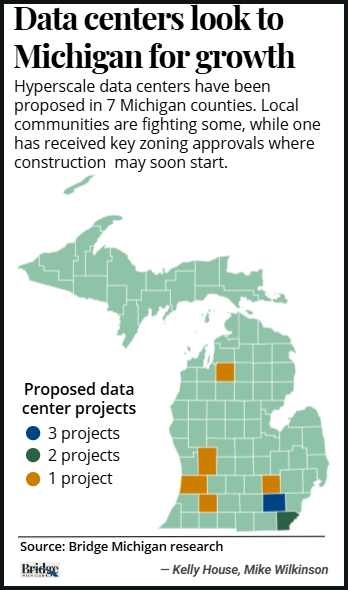
What an AI Data Center Really Means for Nearby Property
It’s Not “Just Another Warehouse”
AI data centers:
Consume enormous electricity loads
Require industrial-grade cooling systems
Operate 24/7 with backup generators
Create low employment density compared to footprint
This matters because land use intensity affects surrounding property values differently than retail or office space.
Property Value Impact Depends on Zoning and Buffering
Values don’t drop automatically, but they do change based on:
Distance from the site
Traffic rerouting
Noise mitigation
Visual screening
Tax treatment
Buyers don’t always walk away, but they negotiate harder.
Zoning Is the Battlefield Most People Ignore
AI companies don’t “take” land. They apply pressure to zoning boards.
In Michigan:
Townships control zoning
Planning commissions shape future land use
Special land use permits can override expectations
Most homeowners never attend meetings, until decisions are already made.
Water, Power, and the Hidden Infrastructure Risk
AI data centers raise legitimate concerns:
Water consumption for cooling
Electrical grid strain
Backup generator emissions
Long-term utility upgrades
If utilities are expanded, someone pays — and it’s often taxpayers or ratepayers.
That cost can ripple into:
Municipal budgets
Property taxes
Long-term land desirability
What Buyers Should Ask Before Purchasing Michigan Land
Before buying rural land or homes near open acreage, buyers should ask:
Questions Smart Buyers Are Asking Now
Is this parcel near utility-scale power lines?
Are zoning changes being discussed?
Has the township approved industrial overlays?
Are data centers or solar projects proposed nearby?
What does the master land-use plan show for the next 10–20 years?
Ignoring these questions is how people get blindsided.
What Sellers and Landowners Need to Watch For
If you own:
Farmland
Vacant land
Edge-of-town residential property
You may see interest spike — or buyer hesitation increase — depending on location.
Some landowners benefit.Some lose leverage.Some get stuck in uncertainty.
Knowing which category you’re in requires local, hyper-specific analysis — not YouTube panic.
Is This Bad for Michigan Real Estate?
No. But it’s not neutral either.
AI infrastructure will:
Raise land values in some corridors
Depress residential demand in others
Redefine “desirable” locations
Create new buyer objections agents must address
Ignoring it is worse than opposing it.
The Smart Move Isn’t Fear- It’s Awareness
The real risk isn’t AI.
The real risk is buying or selling blind.
Land use shifts quietly. Zoning changes slowly. Market reactions happen suddenly.
The people who win are the ones paying attention early.
FAQ SECTION (People Also Ask)
Are AI data centers coming to Michigan?
Yes. Multiple AI and advanced computing facilities are being proposed across Michigan, particularly in areas with strong utilities and available land.
Do AI data centers hurt property values?
They can, depending on proximity, zoning, and mitigation. Some properties see increased value, others face buyer resistance.
Can townships stop AI data centers?
Yes. Zoning boards and planning commissions control approvals, overlays, and special land use permits.
Should I avoid buying land near farmland?
Not automatically. But buyers should review zoning plans and infrastructure proposals before purchasing.
Will AI change Michigan real estate long-term?
Yes. AI infrastructure will influence land demand, pricing, and development patterns over the next decade.



Comments